Global Tensions and WW3
Global Tensions and WW3 are not isolated incidents but interconnected crises reflecting deeper systemic issues—economic inequality, political corruption, historical grievances, and unchecked nationalism. The world stands at a crossroads. Whether we spiral into a catastrophic global war or forge a path of cooperation and resilience depends on the choices made today by governments, institutions, and ordinary citizens alike.
1. Current Global Conflicts and Their Implications
The world in 2025 is witnessing an alarming escalation of global conflicts, pushing humanity toward one of its most precarious eras since the Cold War. Armed confrontations, power struggles, and territorial disputes have intensified across multiple continents, creating not only humanitarian disasters but also deep economic, political, and security implications for the international community.
2. Major Flashpoints in 2025
a. Russia-Ukraine War: More than three years since its inception, the war between Russia and Ukraine continues to dominate headlines. With renewed offensives in the eastern region and the involvement of NATO countries providing military support to Ukraine, the conflict has reached a new level of intensity. The war has resulted in severe humanitarian crises, infrastructure collapse, and the displacement of millions.
b. Middle East Tensions: The Israel-Gaza conflict has once again reignited, drawing in regional players such as Iran and Lebanon’s Hezbollah. Saudi Arabia, once leaning towards normalization with Israel, has reverted to a more cautious stance. The broader Sunni-Shia divide continues to fuel proxy wars in Yemen and Syria, further destabilizing the region.
c. Taiwan Strait Crisis: China’s aggressive military maneuvers near Taiwan and its assertive rhetoric have escalated tensions in the Indo-Pacific. The U.S., along with its allies like Japan and Australia, have increased naval presence in the South China Sea, creating a volatile environment that could trigger a wider conflict.
2. Humanitarian Impact
These conflicts have led to catastrophic human losses. Refugee numbers have surged to record highs, with over 130 million people displaced worldwide. Civilian infrastructure, including schools, hospitals, and homes, has been decimated in war zones, violating international humanitarian laws.
3. Economic Ramifications
Wars deeply impact the global economy. Supply chain disruptions, skyrocketing oil prices, and reduced investor confidence are only the beginning. The global GDP growth has slowed significantly, and inflation is rampant, especially in conflict-prone regions. Developing countries bear the brunt, facing increased debt burdens and economic instability.
4. Shifting Alliances and Global Polarization
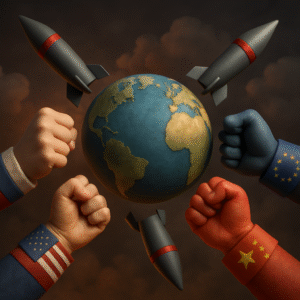
The wars have led to a realignment of geopolitical alliances. Countries are forced to choose sides, reminiscent of Cold War dynamics. BRICS nations (Brazil, Russia, India, China, South Africa) are challenging Western hegemony, forming alternative economic and political coalitions. Meanwhile, Western powers are strengthening NATO and forming new pacts like AUKUS (Australia-UK-US).
5. Risk of Escalation into a Global War
The intertwining of local conflicts with global interests has increased the chances of a larger-scale war. The use of hybrid warfare—cyber attacks, economic sanctions, and disinformation—is becoming normalized. The risk of miscalculation or a false-flag operation triggering World War 3 is no longer speculative—it is a growing concern voiced by global security experts.
6. The Role of International Organizations
The United Nations, though still active in peacekeeping and mediation, faces criticism for its inefficacy. Veto powers in the Security Council often paralyze meaningful resolutions. Calls for UN reform are gaining traction, with proposals to limit veto use in humanitarian crises and introduce a more representative voting structure.
7. Global Citizens and the Role of Media
Amid this turbulence, independent journalism, digital platforms, and citizen activism play crucial roles in documenting atrocities, raising awareness, and influencing public opinion. However, misinformation and propaganda campaigns funded by state and non-state actors are eroding trust and polarizing populations further.
8. The Way Forward
Resolving current global conflicts requires a multipronged approach:
- Diplomatic engagement, especially between rival blocs.
- Economic incentives for peace and demilitarization.
- Strengthened international legal frameworks.
- Empowerment of civil societies and local peace movements.
- Technological collaboration for conflict prevention and humanitarian relief.
Conclusion
Current Global Tensions and WW3 are not isolated incidents but interconnected crises reflecting deeper systemic issues—economic inequality, political corruption, historical grievances, and unchecked nationalism. The world stands at a crossroads. Whether we spiral into a catastrophic global war or forge a path of cooperation and resilience depends on the choices made today by governments, institutions, and ordinary citizens alike.